



Running a small business in Australia means wearing a lot of hats, and payments often sit right at the centre of everything. When invoicing, follow-ups, and reconciliation are handled manually, it is easy for cash flow to feel unpredictable.
In this article, we will look at the online portal payment features that matter most for small businesses, especially if you want to get paid faster, reduce admin time, and keep records cleaner for your accountant or bookkeeper. This guide is written for owners who want a practical view of what to compare when evaluating an online payment portal for small business use.
What is an Online Portal Payment System?
An online payment portal is a secure webpage or interface where customers can enter payment details to pay a business online.
To accept online payments, most businesses need a few key pieces working together:
- A merchant account supported by an acquiring bank
- A payment portal to securely capture customer payment details
- A payment gateway and processor that securely transmit and route the transaction through the relevant payment networks
How does an online portal payment work?
The process usually works like this:
- The customer enters their payment details on a secure payment page.
- The portal securely collects the payment details and passes them to the payment gateway for encryption and processing.
- The processor routes the transaction through the relevant networks to the customer’s bank for approval.
- The bank approves or declines the payment.
- If approved, the payment is captured and later settled. Funds are then deposited into the business’s merchant account or nominated bank account according to the provider’s settlement schedule.
In simple terms, a payment portal is an online page where customers can pay a business. It’s similar to paying at a card machine in-store, but online payment portals can also support invoicing, recurring payments, and other payment workflows businesses rely on.
Why Small Businesses in Australia Need a Payment Portal Now
The Australian business landscape is moving fast, and local companies can no longer rely on manual processes to survive. Adopting a payment portal for small businesses is the most effective way to protect your cash flow and keep your operations running smoothly.
Improving Your Cash Flow
Late payments are a constant struggle for many Aussie SMEs. An online payment portal helps solve this by providing an immediate way for clients to settle their bills. When you move to an online portal payment system, you reduce the time spent waiting for funds to clear and shorten the time between invoicing and payment, improving cash flow visibility.
Meeting Modern Client Expectations
Clients now expect the convenience of digital transactions in every part of their lives. A dedicated customer payment portal allows your clients to pay at any time from any device. By using online payment portals, you provide a professional service that makes it easy for people to do business with you, which helps build long-term loyalty.
Reducing Manual Admin Work
Manual reconciliation is a major drain on time and resources. The best payment portal solutions link directly to your accounting software to handle the heavy lifting for you. Utilising payment portals for business ensures that your books stay accurate without the need for constant data entry, allowing you to focus on growing your company instead of chasing paperwork.
The Best Payment Portal Features to Look For
1) Auto Reconciliation
The biggest drain on a small business is manual data entry. The best portals offer auto reconciliation, meaning that when a payment is processed, the system automatically matches it to the corresponding invoice in your accounting software and marks it as paid. This ensures your books stay accurate in real-time without you lifting a finger, significantly reducing the need to manually cross-reference bank statements.
2) Auto-Payment Mandates and Direct Debit
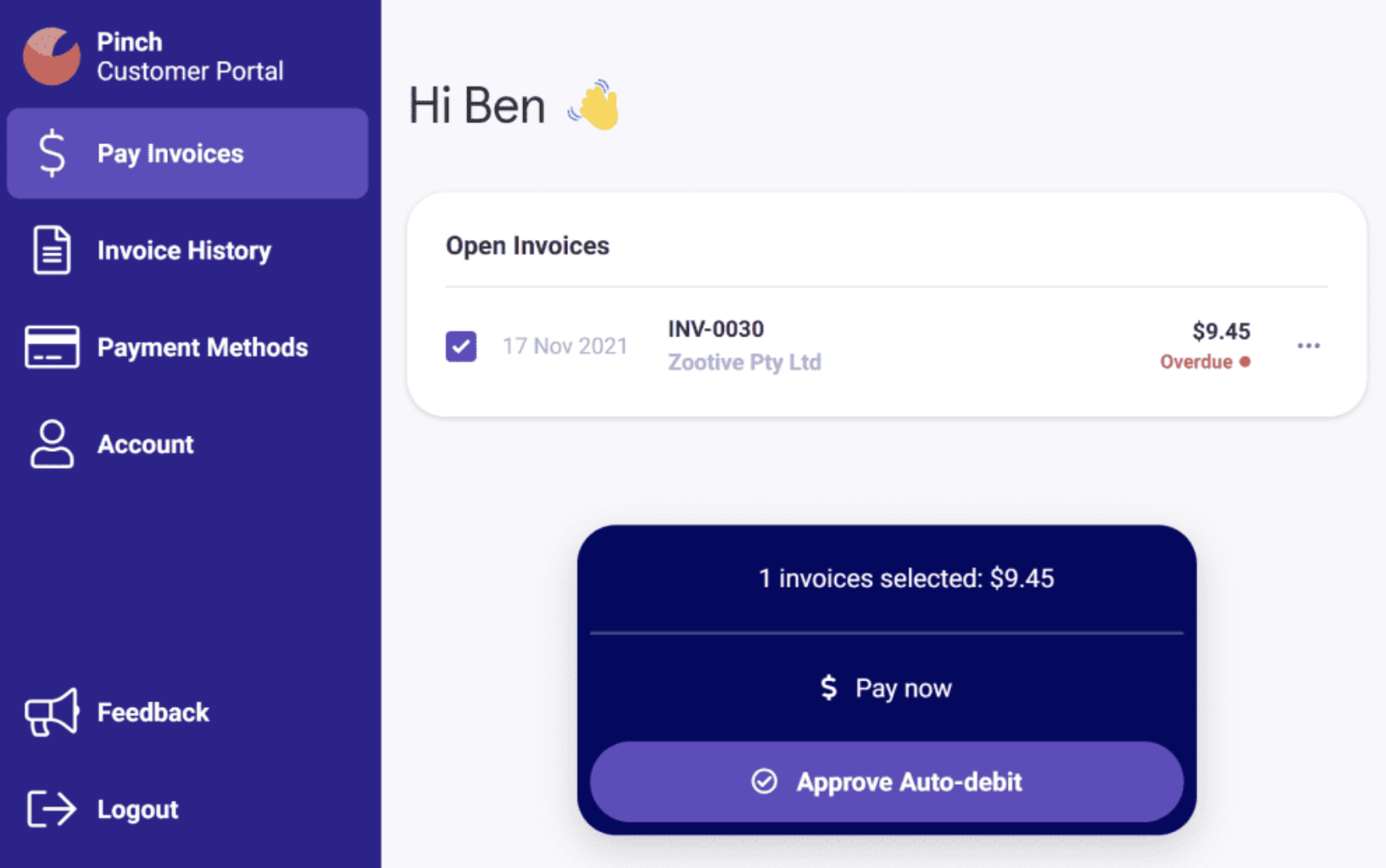
If you invoice the same customers regularly, collecting payment authority once can simplify your entire future billing cycle. By setting up auto-payment mandates, you can utilise direct debit to collect funds automatically on the due date. This shifts the responsibility from the customer to your system, providing a more consistent collection process and steadier cash flow for your business.
3) Bulk Billing and Subscription Management
For businesses that manage a large volume of clients or offer recurring services, efficiency is key. Batch payments allow you to trigger collections for hundreds of customers in a single workflow rather than processing them one by one. When paired with subscription management, your online portal becomes an automated engine that handles complex billing schedules with minimal intervention.
4) Diverse Payment Options for Invoices (Card & Direct Debit)
While automation is the goal, flexibility for one-off transactions is still essential. A robust portal should support immediate credit card payments for everyday invoicing, as they offer the quickest confirmation for both parties. By providing clear invoice payment options within the portal, you make it easier for customers to pay on their own terms while your dashboard tracks every cent.
5) Customer Portal
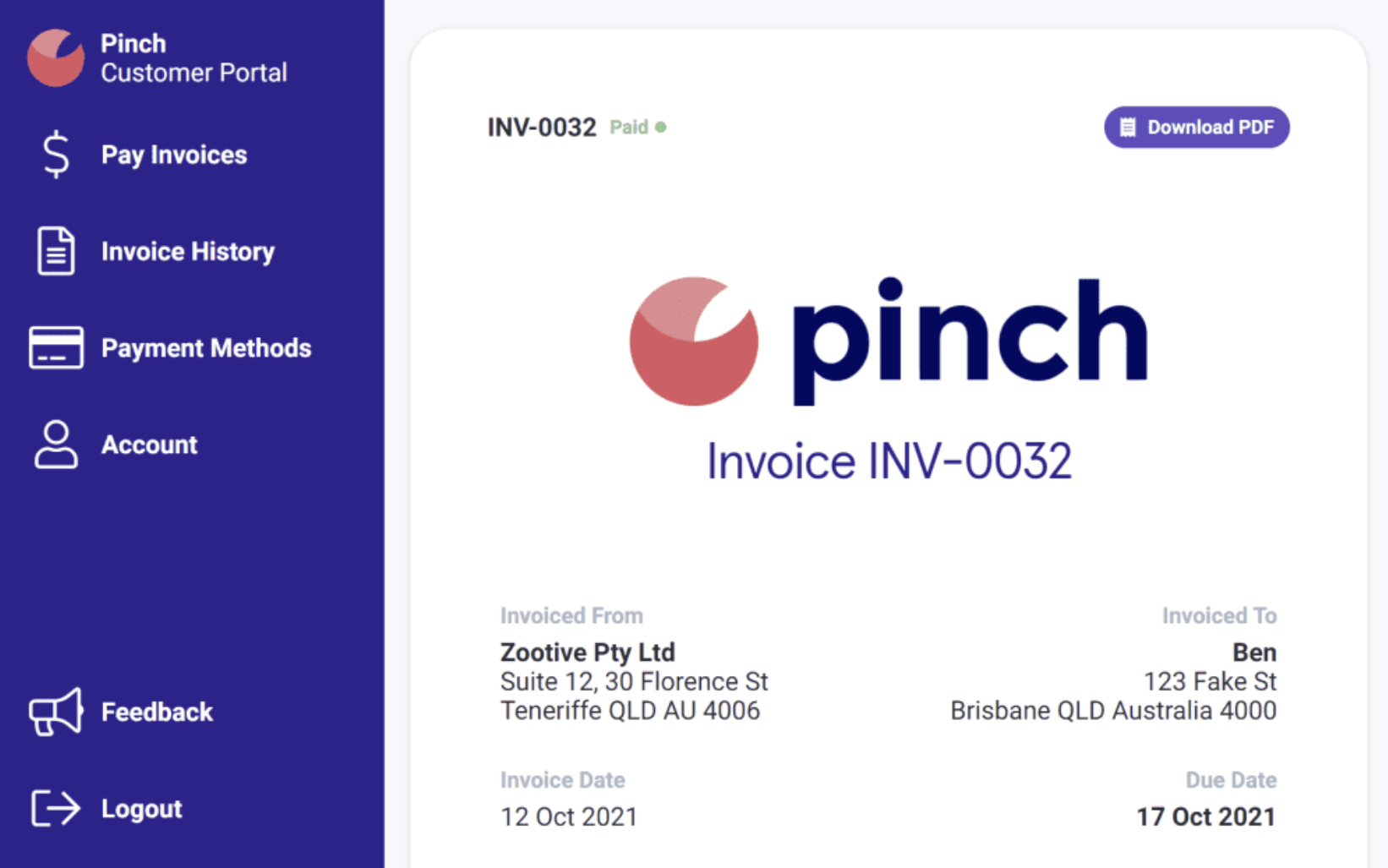
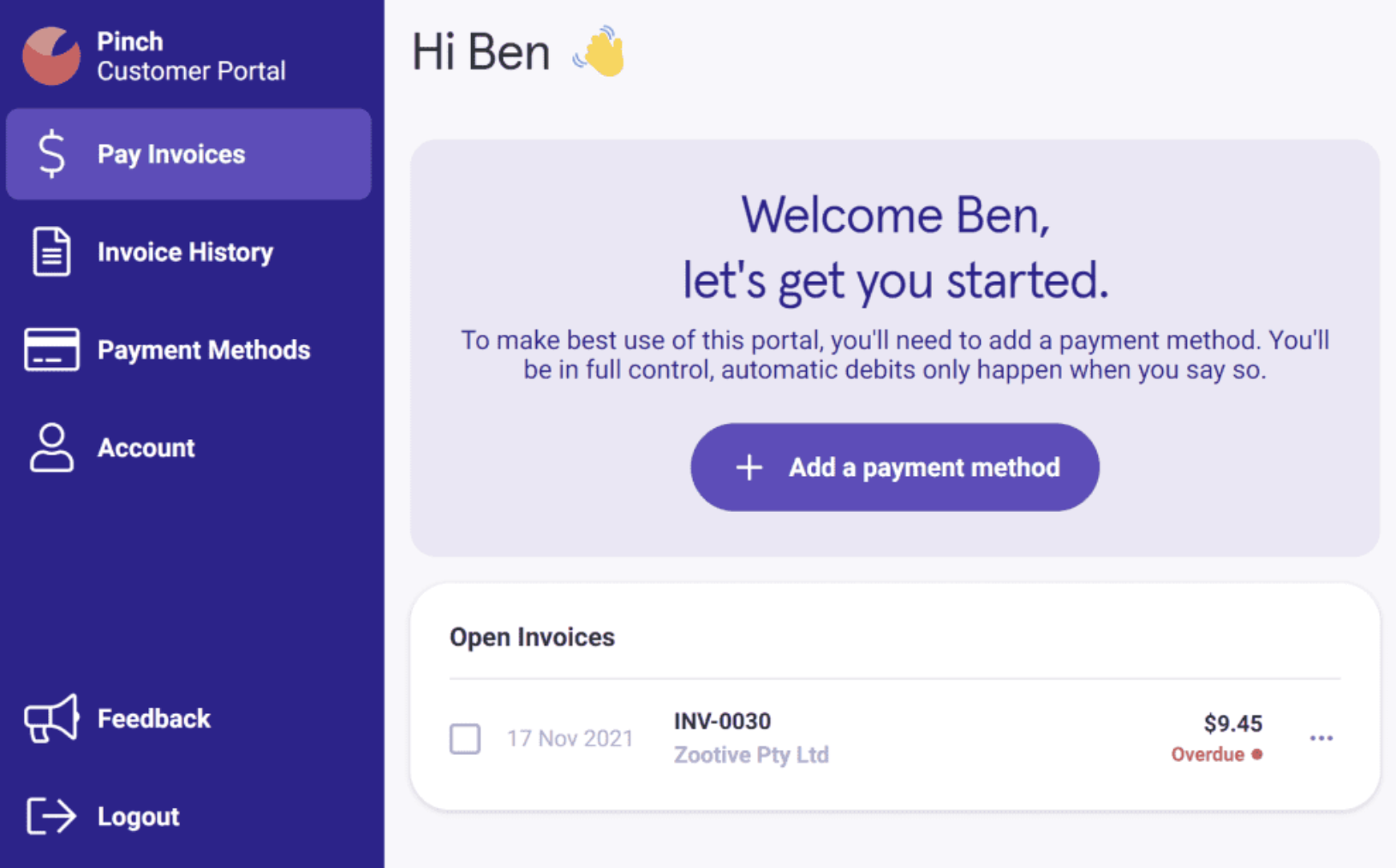
A customer portal reduces admin friction by letting customers manage key payment tasks through a simple self-service experience. Customers can choose to pay immediately or schedule payment for the due date, and securely manage their stored payment methods without contacting your team. With all invoices in one place, they can view history or download PDF copies when needed, reducing re-send requests and email back-and-forth.
6) Easy Setup and Support You Can Actually Reach
Small businesses don’t have time for steep learning curves. A high-quality payment portal should offer straightforward setup and local support that understands the Australian business landscape. Having a team you can actually reach ensures that any technical queries are resolved quickly, allowing you to focus on growth rather than troubleshooting software.
How to Choose the Right Payment Portal for Your Small Business
There is no single “best” portal for everyone. The right choice depends on how you charge customers and how you want your payment process to run day to day.
Here is a practical way to decide.
Step 1: Map your payment types
Ask yourself:
- Do you invoice one-off jobs or ongoing services?
- Do you need payment plans?
- Do you bill weekly, monthly, or by project milestones?
- Do you need to collect deposits?
If you run subscriptions or retainers, direct debit and automation should be a priority.
Step 2: Check your accounting workflow
- If you are using accounting software, choose a platform that integrates properly. It will save you hours.
- If reconciliation is currently a headache, pick a portal that aims to reduce that work, not add another step.
Step 3: Think about customer experience
Look at your current payment process from the customer side.
- Is it clear what they owe?
- Is it easy to pay on mobile?
- Do they have to ask for bank details?
- Do they receive a receipt automatically?
A portal is not only for your business. It is also for your customers.
Step 4: Consider support and scalability
You want a solution that still works when you grow.
- If you hire staff, can you control permissions?
- If you add new services, can your billing rules adapt?
- If you expand, will the platform still suit your needs?
Choosing a strong online payment portal for a small business is often about avoiding future churn.
Where Pinch Payments Fits In
If you are looking for a portal that is built for real business workflows, Pinch Payments is worth a look!
Pinch is a powerful payments platform that helps businesses:
- Automate payment collection via direct debit and card
- Offer flexible billing tools like payment plans and pre-approvals
- Integrate deeply with Xero, QuickBooks, and MYOB, with compatibility designed to fit modern accounting workflows across markets
- Use a developer-friendly API for SaaS and ISVs
- Get local support with global backing as part of Fiserv
If you are comparing online payment portals, it helps to review Pinch pricing to understand what is included across plans and what level of portal functionality you get at each tier. You can also explore our customer stories to see how other Australian businesses use portal payments in real workflows, including recurring billing, invoice collections, and customer self-service.
Summary
Implementing an online payment portal is a strategic move for Australian small businesses aiming to stabilise cash flow and eliminate tedious manual admin. By integrating features like auto-reconciliation and direct debit mandates, owners can ensure their accounting software stays accurate while payments arrive on time without constant follow-up.
These systems modernise the client experience by offering flexible card and invoice options through a dedicated self-service customer portal. When selecting a provider, businesses should prioritise seamless software integration and local support to ensure the platform scales effectively. Ultimately, automating these workflows transforms billing from a time-consuming chore into a streamlined, professional engine for growth.
