



In the current Australian economic landscape, small businesses are more than just a sector; they are the backbone of the nation. According to recent data from the Australian Small Business and Family Enterprise Ombudsman (ASBFEO), small businesses account for over 97% of all Australian enterprises and contribute roughly one-third of the national GDP. With over 2.5 million small businesses operating across the country, the competition is fierce, and the expectations from consumers are higher than ever.
One of the most critical components of running a successful operation today is how you handle transactions. The way customers want to pay is shifting rapidly toward digital, contactless, and automated methods. This guide provides a comprehensive deep dive into payment processing for small businesses, helping you understand the technology and the best strategies to streamline your cash flow.
Understanding Payment Processing for Small Businesses
Before evaluating different providers, it is important to understand the underlying mechanics of small business payment processing. When a customer taps their card or enters their payment details online, a high-speed sequence of processes is triggered, involving multiple parties working together in real time.
- Authorisation: The payment gateway encrypts the data and sends it to the processor. The processor then contacts the customer’s bank to ensure they have sufficient funds and that the card isn't reported lost or stolen.
- Authentication: The customer’s bank verifies the transaction (often using security protocols like 3D Secure for online payments) and sends an "approved" or "declined" message back through the processor.
- Clearing and Settlement: This is the phase where Australian businesses often experience delays. Even after a transaction is approved, the funds aren't instantly in your account. The clearing process involves the banks reconciling the transaction, and settlement is the actual transfer of funds into your business bank account.
The Main Components of Taking Payments for Small Businesses
When setting up your system, you will frequently hear three terms: the gateway, the processor, and the merchant account. Although many modern providers package these components together, understanding their roles makes it easier to evaluate different solutions.
Gateway and Processor Explained
The gateway is the customer-facing layer of the payment process. It manages the checkout experience and ensures payment details are encrypted and transmitted securely. The processor operates behind the scenes, handling communication between card networks such as Visa and Mastercard and the relevant banks to complete the transaction.
The Merchant Account
A merchant account is a holding account where funds are temporarily stored before being settled into your business bank account. With traditional banking setups, applying for a merchant account can be a separate and time-consuming process. Many modern payment service providers simplify this by automatically creating a sub-merchant account, allowing businesses to start accepting payments far more quickly.
Ways Your Small Business Can Accept Payments
For a small business, getting paid smoothly matters just as much as making the sale. The easier you make it for customers to pay, the faster your cash flow moves and the fewer admin headaches you face. Below are the most common and practical ways small businesses can accept payments, and how to choose the right mix.
Cash and In-Person Payments
Cash is still used for immediate, face-to-face transactions. While simple, it is usually limited to local or in-person scenarios and becomes less practical as businesses expand or sell remotely.
Bank Transfers and Manual Invoices
Bank transfers are common in service-based and B2B businesses. An invoice is issued, and payment is made manually. While this can suit larger one-off transactions, it’s generally not convenient. It often creates extra admin work, requires manual tracking, and leads to time-consuming follow-ups. With modern tools available today, many businesses choose more automated options to reduce effort and get paid faster.
Card Payments
Credit and debit cards are now expected by most customers, particularly online. They are widely used for one-off payments, bookings, and ecommerce, and often form the foundation of a small business payment setup.
Automated Payments and Direct Debit
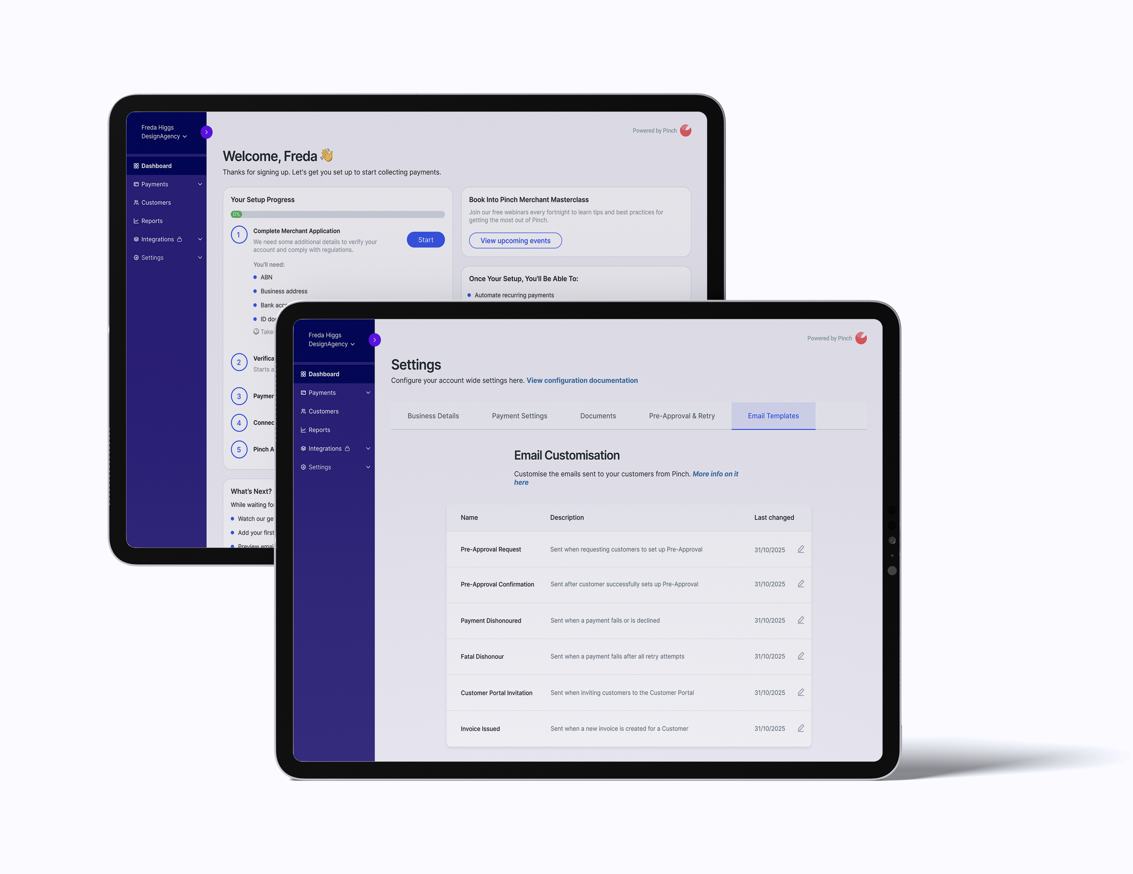
Automated payments and direct debit make it easier for small businesses to collect payments on time. When considering how to take payments online for small businesses, direct debit solutions like Pinch Payments help automate collections, reduce follow-ups, and minimise time spent managing invoices.
Common Payment Processing Challenges for Small Businesses
While the technology behind payments has advanced, many Australian business owners still face significant hurdles that can hinder their daily operations.
The Burden of Manual Reconciliation and Admin Bloat
For many businesses, the work only begins after a payment is received. Manually matching bank statements to invoices in platforms like Xero, QuickBooks, or MYOB is a significant administrative drain. This double-handling of data often leads to human error, resulting in inaccurate financial reporting and wasted hours that could be spent on high-value tasks.
Persistent Late Payments and Cash Flow Gaps
Relying on customers to manually pay their invoices often results in extended payment cycles. When a business has no control over when the funds are initiated, they are at the mercy of their clients' schedules. This lack of predictability makes it difficult to manage operational costs like payroll and stock, especially when thirty-day terms are frequently ignored.
The Growing Risk of Fraud and Security Breaches
As digital transactions increase, so do the risks of unauthorised activity and card fraud. Protecting sensitive customer data is a massive responsibility for any small business. Without robust security measures and tokenisation, businesses are vulnerable to chargebacks and data leaks that can damage their reputation and lead to financial penalties.
Friction During the Sales Process
Inflexible billing options can often become a barrier to closing a deal. If a business can only accept one-off payments, they may lose out on larger contracts. Many clients prefer the flexibility of payment plans or the convenience of pre-approvals for recurring work. Without these tools, the sales process becomes more difficult and less accessible for the average customer.
Fragmented Technology and Integration Issues
For software companies and service providers, a payment system that does not talk to their existing tech stack is a major disadvantage. Using multiple, disconnected platforms leads to a fragmented user experience and makes it nearly impossible to scale operations efficiently. A lack of customisable integration options often forces businesses to change their workflows to suit the software, rather than the other way around.
Why Smarter Payment for Small Businesses Drives Growth
When payment processing is seen only as an expense, its real value is often overlooked. In reality, automation can become a powerful growth driver. Well-designed payment systems support business growth in three key ways.
Eliminating Reconciliation Debt
One of the hidden costs for Australian small businesses is manual admin. Time spent manually matching bank transactions with invoices in systems like Xero or MYOB quickly adds up. A more advanced payment setup integrates directly with accounting software, automatically updating invoice statuses, recording processing fees, and reconciling transactions. This reclaimed time can then be redirected toward sales, strategy, or product improvement.
Making It Easier for Customers to Pay
Customer attention is limited, especially in online environments. When the payment process feels slow or inconvenient, potential customers may abandon the transaction altogether. Offering options such as digital wallets, including Apple Pay and Google Pay, allows customers to complete payments quickly using biometric authentication. A smoother checkout experience often leads to higher conversion rates.
Creating Predictable Cash Flow with Recurring Payments
For service-based businesses, manually collecting the same recurring fees each month is inefficient. Smarter payment systems support automated direct debits or stored card arrangements, ensuring payments are collected on schedule without follow-ups. This consistency improves cash flow predictability and gives businesses greater confidence to plan and reinvest for growth.
What to Look for in a Small Business Payment Solution
Choosing the right payment solution is not just about accepting money. For small businesses, it is about reducing friction, improving reliability, and supporting growth without adding complexity. When comparing options, these are the key factors to consider.
- Reliable and Predictable Payment Collection
A payment solution should process transactions consistently and provide clear expectations around settlement times. Unpredictable delays make cash flow harder to manage and often lead to unnecessary follow-ups. Reliable payment collection helps businesses plan expenses, manage wages, and operate with confidence. - Automation That Reduces Manual Work
Manual invoicing and payment tracking quickly become a burden as transaction volumes increase. Look for solutions that support automated collections, recurring billing, and scheduled payments. Automation reduces admin time, lowers the risk of human error, and ensures payments are collected on time without constant oversight. - Multiple Payment Options for Customers
Customers expect flexibility in how they pay. A strong payment solution should support both card payments and bank-based methods such as direct debit. Offering multiple options improves completion rates and reduces friction, particularly for recurring services or higher-value transactions. If you’re comparing options, it’s also worth reviewing Pinch Payments pricing to see which plan matches your business needs. - Seamless Accounting Integration
Payment data should flow directly into your accounting system. Seamless integrations reduce manual reconciliation, improve reporting accuracy, and remove the need for duplicate data entry. This is especially important for small teams managing finances alongside daily operations. - Security and Compliance Built In
Handling payments comes with responsibility. A payment solution must meet industry security standards and protect customer data at every stage of the transaction. Built-in compliance reduces risk and removes the need for businesses to manage complex security requirements on their own. - Scalability as Your Business Grows
What works for a small number of customers may not work as the business expands. A payment solution should scale easily as transaction volumes increase, without requiring a complete system change. Scalability ensures your payments infrastructure supports growth rather than becoming a bottleneck. - Local Support and Market Understanding
Australian businesses benefit from payment providers that understand local banking systems, regulations, and settlement practices. Access to responsive local support can save time and prevent small issues from becoming larger operational problems.
How Pinch Simplifies Payments for Australian Small Businesses
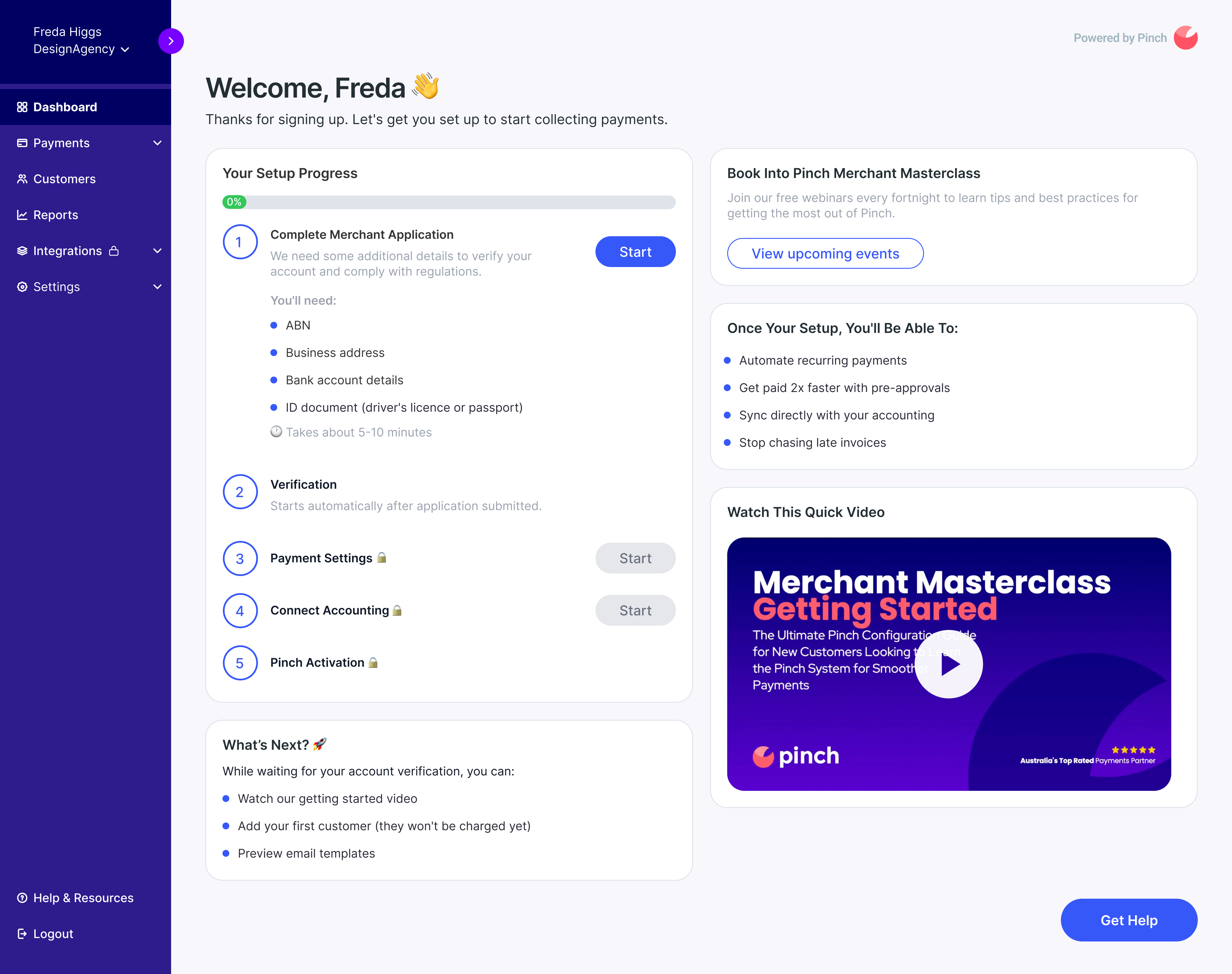
Pinch is designed to solve the most common payment challenges faced by Australian small businesses. Rather than adding complexity, it focuses on making payment collection more reliable, flexible, and easier to manage.
- Automated Payment Collection
Pinch enables businesses to automate both direct debit and card payments. Instead of relying on manual invoices and follow-ups, payments can be scheduled, recurring, or pre-approved. This reduces missed payments and helps shorten the time between invoicing and receiving funds. - Flexible Billing Options for Customers
With support for payment plans and pre-authorised billing, Pinch allows businesses to offer more flexible ways for customers to pay. This is especially useful for higher-value services or ongoing engagements, helping improve payment completion without increasing admin work. - Built-In Accounting Integrations
Pinch integrates directly with accounting platforms used by Australian small businesses, including Xero, QuickBooks, and MYOB Payments. Payments are automatically reconciled, reducing manual data entry and improving visibility over cash flow. - Support for More Complex Use Cases
For businesses with advanced requirements, Pinch provides a developer-friendly API. This makes it suitable for SaaS platforms and independent software vendors that want to embed payments directly into their systems while maintaining control over the customer experience. - Local Support with Global Infrastructure
Pinch combines local Australian support with the backing of Fiserv, a global payments technology provider. This gives small businesses access to enterprise-grade infrastructure while still working with a team that understands local banking and settlement practices.
The success of an Australian small business often comes down to how effectively it manages its most vital resource: time. While manual invoicing and traditional bank transfers might seem like the standard way of doing things, they represent a significant drain on your productivity and your cash flow. By embracing a modern, automated approach to payment collection through a modern, automated approach to payment collection, you are doing more than just simplifying your admin; you are providing your business with the stability it needs to thrive in a competitive market. Are you ready to transform your cash flow and reclaim your hours? Get started with Pinch Payments today.