 Curious to see how Pinch works? Check it out



Accountants can help clients get paid faster by moving them off manual invoicing and onto automated collection methods like direct debit. This reduces reliance on clients chasing payments manually and removes the delays caused by bank transfers, cheques, and forgotten invoices.
Late payments are one of the most common problems accountants hear about from small business clients. The fix isn't better nagging. It's a better system.
This guide covers the practical changes accountants can recommend to clients who want more predictable cash flow, less time spent on collections, and fewer overdue invoices.
Why Late Payments Are a Problem for Accounting Clients?
Late payments create cash flow gaps that affect a business's ability to pay suppliers, staff, and tax obligations on time. For small businesses, a handful of overdue invoices can be the difference between meeting BAS deadlines and falling behind.
Common causes of late payments include:
- Manual invoicing with no automated follow-up
- Payment methods that rely on the customer taking action (bank transfer, cheque)
- No fixed payment date, so invoices get deprioritised
- No visibility into which invoices are overdue until it's too late
Most of these causes are structural, not behavioural. Clients don't need to chase harder. They need a system that removes the need to chase at all.
What Is Direct Debit?
Direct debit is a payment method that allows a business to automatically withdraw funds from a customer's bank account on an agreed date. In Australia, this runs through the Bulk Electronic Clearing System (BECS), the standard network used for direct debit and direct credit transactions.
Once a customer authorises a direct debit agreement, the business can collect payments without sending a new invoice or waiting for the customer to log in and pay. This shifts the payment process from customer-initiated to business-initiated, which is the main reason direct debit improves payment timing.
How Direct Debit Helps Clients Get Paid Faster
Direct debit helps clients get paid faster because it removes the two biggest causes of late payment: forgotten invoices and manual transfers. The business sets the payment date once, and the funds are collected automatically from then on.
This matters most for businesses with recurring revenue, such as:
- Gyms and studios collecting membership fees
- Agencies billing retainers
- Trade businesses collecting instalment payments
- Subscription and SaaS businesses billing monthly or annually
For accountants, recommending direct debit also reduces the volume of debtor follow-up work that often falls on the bookkeeping or accounts team.
What is a Customer Payment Portal?
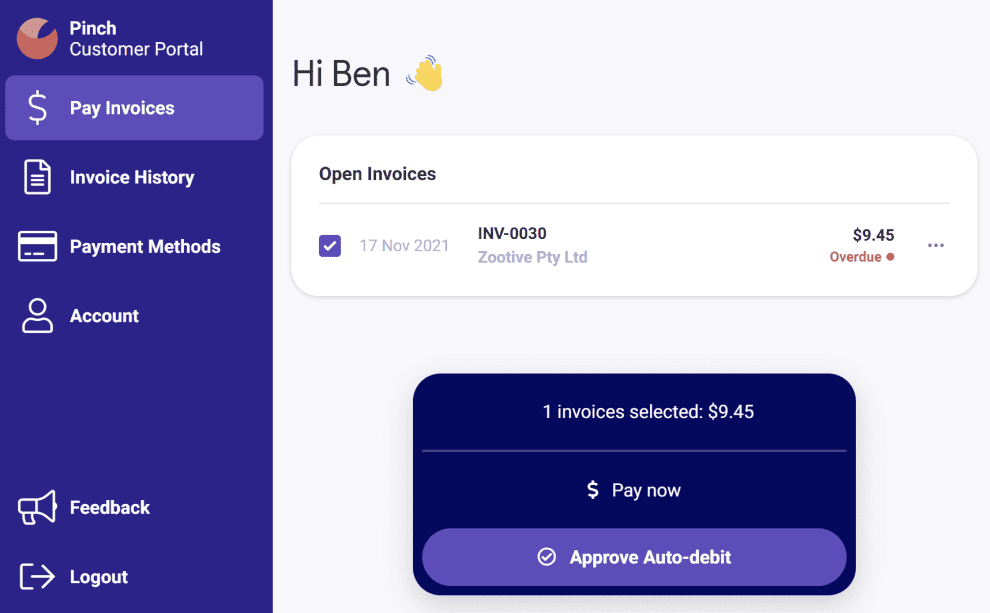
A customer payment portal is an online space where a business's customers can view invoices, update payment details, and make payments without contacting the business directly. It reduces the back-and-forth involved in payment collection and gives customers a self-service option.
For clients who don't want to move fully to direct debit, a payment portal is a lower-friction first step. It still shortens payment timeframes because customers can pay in a few clicks instead of requesting bank details or waiting for an invoice email.
What is Payment Automation?
Payment automation is the use of software to handle repetitive payment tasks such as invoicing, payment collection, reconciliation, and follow-up on overdue accounts. Instead of a bookkeeper manually matching payments to invoices, the system does this automatically.
Payment automation directly supports faster payment cycles because it removes delays caused by manual data entry and follow-up. It also reduces the risk of human error, which is a common cause of reconciliation issues at month-end.
5 Ways Accountants Can Help Clients Improve Cash Flow
1. Move Recurring Billing to Direct Debit
Any client with predictable, repeat charges is a strong candidate for direct debit. This includes retainers, memberships, subscriptions, and instalment plans. Direct debit removes the need for the client to send a new invoice every billing cycle.
2. Set Clear Payment Terms Upfront
Clients often lose leverage by not stating payment terms clearly on invoices and agreements. Recommend fixed due dates, and where possible, a fixed collection date tied to direct debit rather than an open-ended "within 14 days" term.
3. Reduce Manual Invoice Chasing
Manual follow-up is time-consuming and inconsistent. Automated payment reminders and automatic retries on failed payments reduce the admin load on both the client and their bookkeeping team.
4. Give Customers a Self-Service Payment Option
A customer payment portal lets customers pay on their own time, without needing to call or email the business.
5. Reconcile Payments Automatically
Manual reconciliation is one of the most time-intensive parts of bookkeeping. Payment automation tools that sync with accounting software cut down the time spent matching bank transactions to invoices, which speeds up month-end reporting.
How Pinch Payments Supports Accountants and Their Clients
Pinch Payments gives Australian small businesses a way to automate recurring billing, collect payments via BECS direct debit, and give customers a self-service payment portal. For accountants, this means fewer overdue invoices to chase on behalf of clients and cleaner reconciliation at reporting time.
Accountants who recommend these changes early save their clients time on admin and give themselves cleaner books to work with at reporting time.
FAQ
Disclaimer: The information provided in this guide is for general informational purposes only. It does not constitute legal, financial, or taxation advice. While we strive to provide accurate and up-to-date details based on current Australian regulations, business requirements can change. We recommend consulting with a qualified accountant, lawyer, or business advisor before making any significant decisions or taking action based on this content.
