Curious to see how Pinch works? Check it out



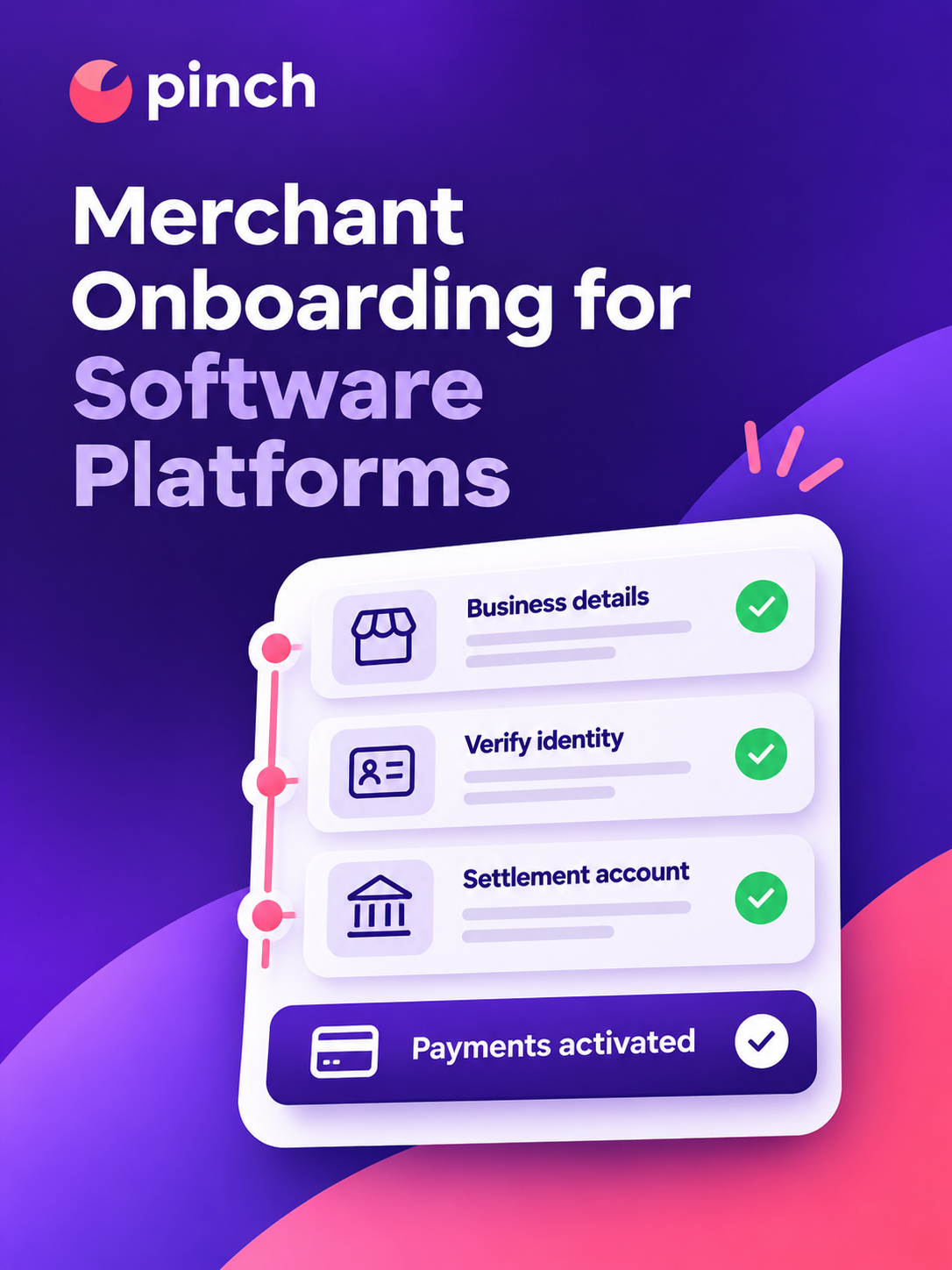
Merchant onboarding is the process of registering, verifying and enabling a business to accept payments. For software platforms, it is the bridge between a merchant signing up for your product and collecting their first customer payment.
A booking platform might win a new business today, but payments cannot become useful until that business is ready to transact. Missing documents, repeated data entry and unclear approval status can leave merchants waiting and your support team chasing updates. A better onboarding flow removes avoidable delays while keeping the necessary checks in place.
What Is Merchant Onboarding for Software Platforms?
When your SaaS product enables other businesses to collect payments, each business needs to be onboarded under the payment model you have chosen. This is different from setting up payments for your own software subscription: you are enabling your merchants to charge their customers.
The process connects business details, identity verification, risk review, payment configuration and settlement arrangements. Creating a merchant record is one step; it does not automatically mean the business is approved to process live payments.
Who Is Responsible for Merchant Onboarding?
- Your software platform: Designs the signup experience, collects or routes the required information, and shows merchants their progress and next steps.
- The payments provider and its acquiring partners: Apply the verification, risk assessment and approval processes defined by your agreed payment model.
- Shared responsibilities: Agree who requests additional documents, answers approval questions and handles bank account changes before building your onboarding flow.
Embedding payments in your product does not automatically transfer every operational responsibility to the provider.
What Information Do Merchants Need to Provide?
Requirements depend on the provider, business structure and payment model. For Australian platforms using Pinch, prepare merchants for the following:
- Business details: Legal and trading names, ABN, contact details and registration evidence. Explain what the business sells and how customers will pay.
- Identity and ownership information: Current identification for the relevant people, including ultimate beneficial owners. Pinch's compliance guide includes individuals holding 25% or more of company shares.
- Settlement account evidence: Bank details and a recent statement confirming the account. Pinch requires the account name to match the company name and does not settle Pty Ltd company funds into personal accounts.
- Structure-specific documents: Trust deeds or other supporting evidence where required. Avoid presenting one universal checklist to companies, trusts and other entity types.
Show the current requirements before merchants begin. Pinch's Compliance Guide explains accepted identity documents, bank statement requirements and evidence for different structures.
How Does the Merchant Onboarding Process Work?
1. Collect the application
Capture the information the provider needs to identify the business and understand its payment activity. Reuse relevant details already held in your product, but ask the merchant to confirm they are current. Validate incomplete fields before submission.
2. Create the merchant account
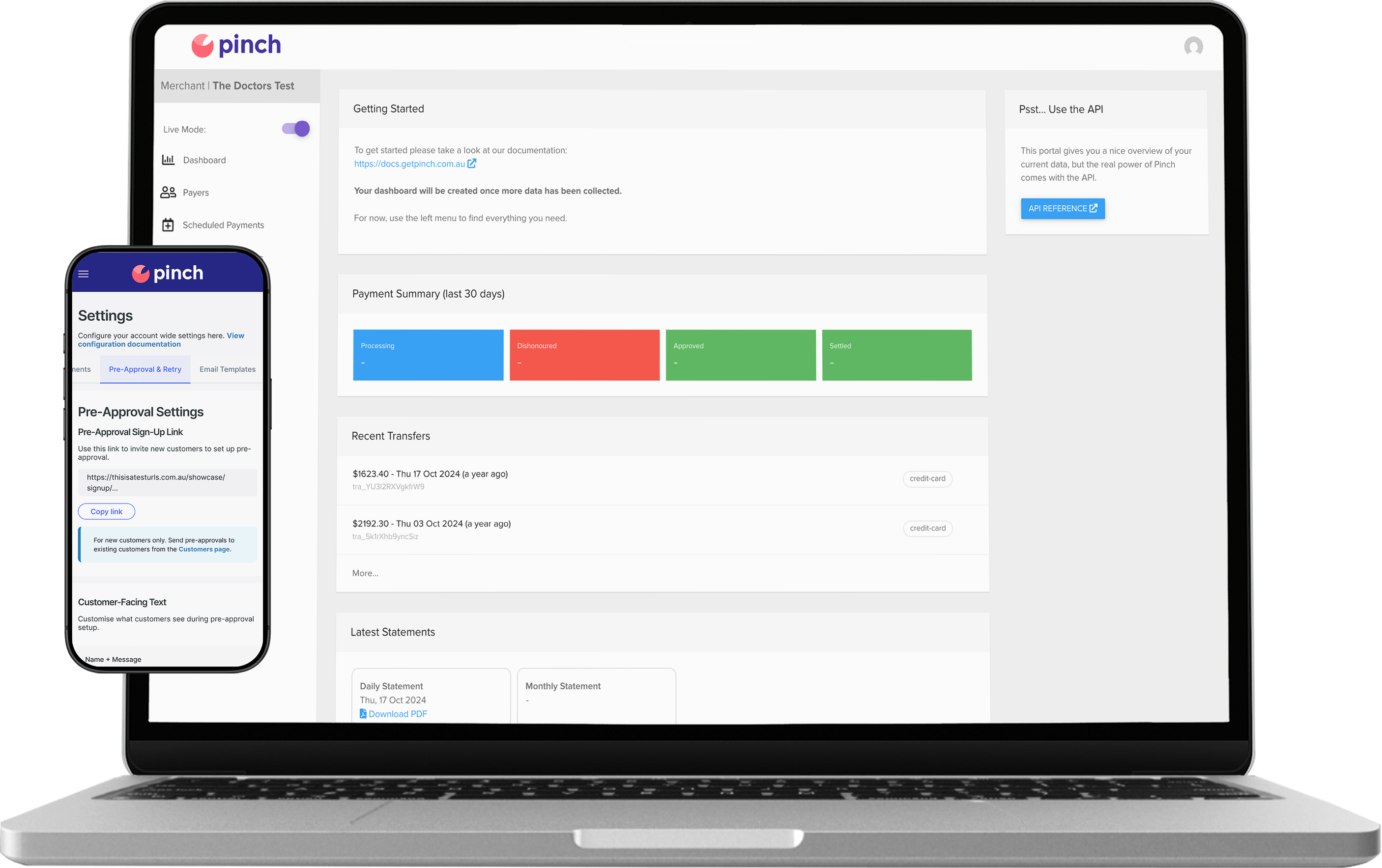
Connect the application to the correct merchant record in your payments system. With Pinch Managed Merchants, your platform can create merchant accounts through the API or Developer Portal and manage them using its credentials. Save the merchant identifier so later actions reach the right account.
3. Complete verification and risk review
Submit the required evidence and respond to follow-up requests. KYC checks identify the relevant people; business verification establishes the entity and ownership structure. The provider also evaluates whether the merchant fits its supported payment and risk requirements. Automation can assist these checks, but some applications need human review.
4. Confirm activation and configure payments
Use the provider's actual approval status to decide when live payments can be enabled. Pinch's managed merchant documentation describes compliance updates through webhooks and confirms that an active merchant status clears the merchant to take live payments. Configure the payment methods and settlement workflow for that account.
5. Help the merchant reach the first payment
Approval is not the end of the product journey. Show the merchant how to collect a payment, identify its outcome and understand settlement reporting. Make support available when a merchant is technically activated but still unsure how to use the feature.
How Can Platforms Speed Up Merchant Onboarding?
The biggest gains often come from removing repeat work and making the next action obvious:
- Collect complete information once. Prefill known details, allow corrections and explain why each new field is needed. Avoid asking merchants to retype information across disconnected forms.
- Make document requests specific. State which document is required and what makes it acceptable. A clear upload request is more useful than a generic message saying verification failed.
- Show progress and next actions. Distinguish an incomplete application, a review in progress and an approved account. Tell merchants when they need to act and when they are waiting for a decision.
- Automate routine updates. Use provider events to keep your product's status current. Design your integration to handle repeated notifications safely and give your support team visibility into unresolved cases.
- Keep a path to human support. Complex ownership structures and unusual documents need assistance. Give those cases a clear owner instead of sending merchants through the same automated steps repeatedly.
- Measure the bottlenecks. Track application completion, requests for additional evidence, time to approval and time to first payment. Separate merchant delays from review delays so improvements target the right problem.
How Long Does Merchant Onboarding Take?
There is no single timeline for every merchant. Complete applications can move more smoothly, while ownership questions, missing evidence or additional review can extend the process. Ask your provider for realistic expectations for your merchant base rather than promising instant approval.
Faster onboarding means less unnecessary waiting. It still needs to produce an account that is approved, correctly configured and usable.
How Pinch Helps Platforms Onboard Merchants
Pinch Managed Merchants gives software platforms a way to create and manage merchant accounts within an integrated payment workflow. Verification can be built into your onboarding flow, with compliance status updates helping your product show the next step.
PassM8 used Pinch’s Managed Merchants flow to integrate onboarding for individual studios. Founder Philip Johns describes the partnership: “Pinch helped PassM8 deliver enterprise-grade billing capability from day one, something that would have been impossible without a true integration partner.”
For platforms evaluating a broader Payfac-as-a-Service model, Pinch Glassbox includes online merchant onboarding, secure document upload and integrated KYC automation. Its merchant management and reporting capabilities support the operational work that continues after signup.
The right starting point depends on how much of the merchant experience your platform wants to manage. Discuss your onboarding flow, business types and payment requirements with Pinch before deciding which setup fits.
Disclaimer: The information provided in this guide is for general informational purposes only. It does not constitute legal, financial, or taxation advice. While we strive to provide accurate and up-to-date details based on current Australian regulations, business requirements can change. We recommend consulting with a qualified accountant, lawyer, or business advisor before making any significant decisions or taking action based on this content.