Curious to see how Pinch works? Check it out



A payment facilitator, or PayFac, is a business that enables other businesses to accept payments through its payment infrastructure, simplifying the process of getting merchants set up to take payments.
For Australian SaaS platforms and Independent Software Vendors (ISVs), the PayFac model creates an opportunity to embed payments directly into software, streamline merchant onboarding and generate additional revenue from payment processing.
But becoming a PayFac involves more than integrating a payment gateway. It requires merchant onboarding processes, compliance controls, fraud monitoring, payment infrastructure and relationships with acquiring institutions.
In this guide, we'll explain what a payment facilitator is, how the PayFac model works, what it takes to become one in Australia and how Pinch Glassbox helps software platforms build embedded payment experiences without developing the entire infrastructure themselves.
What Is a Payment Facilitator (PayFac)?
A payment facilitator (PayFac) enables businesses, commonly called sub-merchants, to accept electronic payments through a payment arrangement managed by the facilitator.
In a traditional PayFac model, the facilitator operates under an agreement with an acquiring institution and takes responsibility for important parts of the merchant relationship.
These responsibilities typically include:
- Merchant onboarding and verification
- Risk assessment and underwriting
- Payment processing infrastructure
- Fraud monitoring and dispute management
- Compliance with applicable payment industry requirements
- Settlement arrangements and transaction reporting
Instead of each business independently establishing a traditional acquiring relationship, the PayFac provides a more integrated route to payment acceptance.
For SaaS platforms, this creates opportunities to offer payments as part of their existing software experience.
For example, a job management platform could enable its customers to collect invoice payments without leaving the software. Similarly, an appointment booking platform could integrate payment collection directly into its booking workflow.
This approach is part of the broader shift towards embedded payments, where payment functionality becomes a natural part of the software customers already use.
How Does a PayFac Differ From a Payment Gateway?
Although payment gateways and payment facilitators work together, they perform different functions.
A payment gateway securely transmits payment information between the relevant payment systems to help authorise and process transactions.
A payment facilitator takes on a broader role involving merchant onboarding, risk management and the commercial arrangements that enable businesses to accept payments.
A gateway primarily provides transaction-processing technology. A PayFac manages additional responsibilities associated with supporting merchants within its payment ecosystem.
However, the distinction is not always absolute. Some payment providers offer both gateway and PayFac services, while others work with acquiring institutions and specialist partners.
For SaaS platforms, understanding this difference is important when deciding whether to simply integrate payments or pursue greater control over the merchant and payment experience.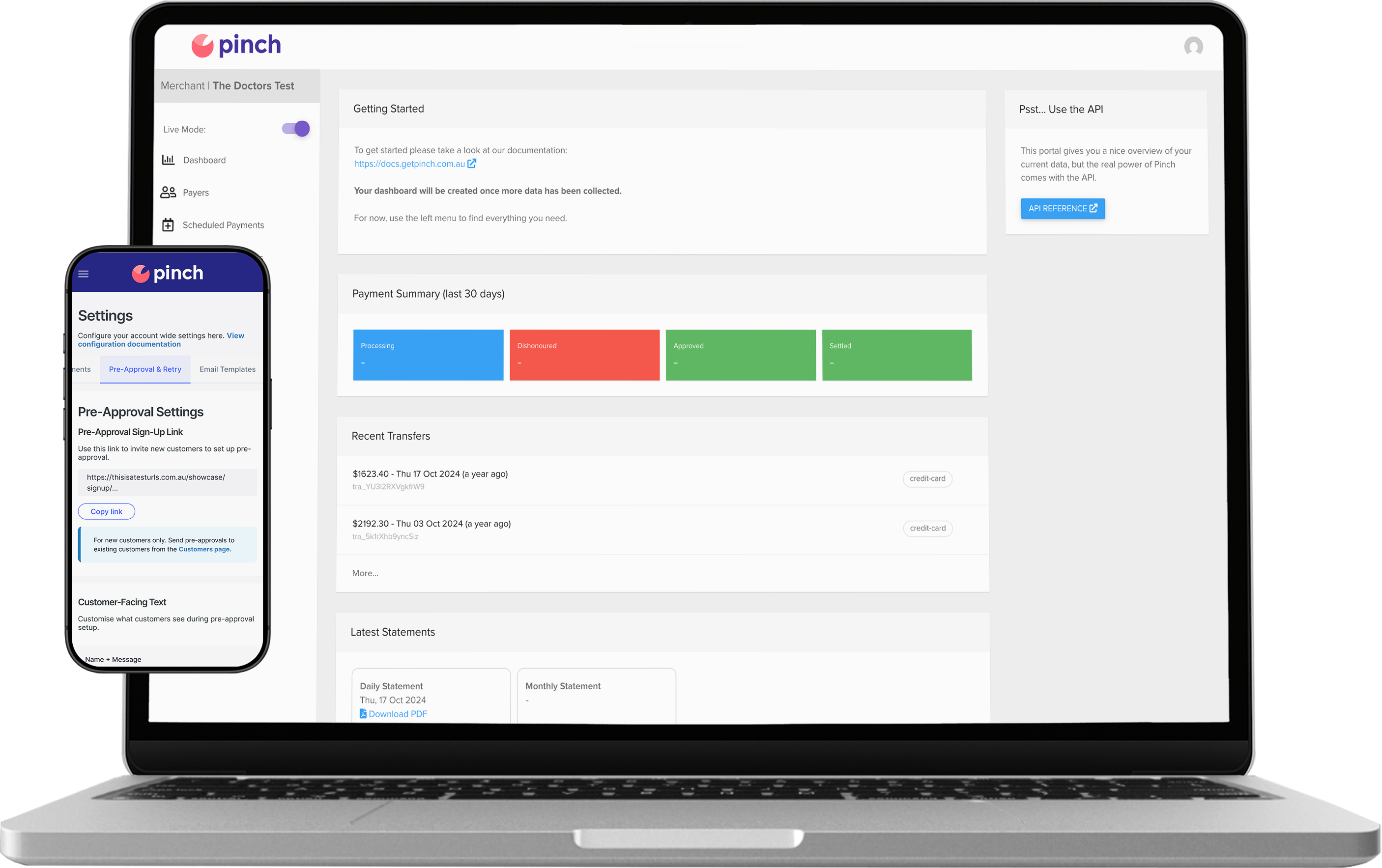
How Does a PayFac Differ From an ISO?
An Independent Sales Organisation (ISO) typically helps businesses access payment processing services through an acquiring institution or payment provider.
An ISO may introduce merchants, assist with onboarding and receive referral or ongoing revenue under its commercial agreement.
A PayFac generally takes on more operational responsibility for enabling and managing sub-merchants.
The main difference lies in the level of responsibility and control.
An ISO primarily helps merchants access payment services, while a PayFac typically manages a broader range of onboarding, risk and payment operations.
For SaaS platforms, the PayFac model may offer greater opportunities to integrate payments into their product and develop transaction-based revenue streams.
How the PayFac Model Works
The PayFac model typically involves four key stages.
1. Merchant onboarding
A business registers to accept payments through the software platform or payment facilitator.
Depending on the onboarding arrangement, this process may involve collecting business information, verifying identities and obtaining relevant supporting documentation.
Digital onboarding can help simplify the process and reduce manual administration.
2. Verification and underwriting
Before a merchant begins processing payments, appropriate verification and risk assessments are completed.
These may include:
- Know Your Customer (KYC) checks
- Know Your Business (KYB) verification
- Anti-Money Laundering and Counter-Terrorism Financing (AML/CTF) controls, where applicable
- Sanctions screening
- Beneficial ownership verification
- Merchant risk assessments
The precise requirements depend on the business model, acquiring arrangements and applicable legal and payment scheme obligations.
3. Payment processing
Once approved, the merchant can accept payments using the available payment methods.
For a SaaS platform, these payment capabilities can be integrated directly into workflows such as invoicing, subscriptions, bookings or customer management.
The payment infrastructure handles the transaction through the relevant payment networks and financial institutions.
4. Settlement, fees and reporting
Following payment processing, funds are settled according to the applicable merchant and acquiring arrangements.
The payment infrastructure may also support transaction fee calculations, platform revenue arrangements, settlement reporting and reconciliation.
These capabilities help software platforms manage payments at scale while providing merchants with visibility over their transactions.
Why Australian SaaS Platforms Are Exploring the PayFac Model
For software businesses, payments can become more than a feature. They can create additional commercial opportunities and improve the overall customer experience.
1. A more integrated customer experience
When payments are embedded directly into software, customers can complete more of their work in one place.
For example, an invoicing platform can allow businesses to create invoices and collect payments within the same workflow.
This reduces the need to move between disconnected systems.
2. Additional revenue opportunities
Depending on the commercial model, SaaS platforms may be able to earn revenue from payments processed through their software.
Rather than relying exclusively on subscription fees, platforms can explore transaction-based revenue arrangements.
3. Streamlined merchant onboarding
Integrated onboarding processes can reduce the administration involved in enabling customers to accept payments.
The time required for approval depends on the relevant verification and risk requirements.
4. Greater visibility over payment activity
Access to transaction information can help platforms understand payment volumes, transaction statuses, disputes and merchant activity.
This information can also support better reporting and customer experiences.
5. Stronger customer retention
When payments are integrated into the everyday workflows of a software platform, the product may become more valuable to customers.
Businesses can manage more of their operations in one system rather than relying on multiple disconnected tools.
For software companies exploring these opportunities, Pinch provides embedded payment solutions for ISVs and software platforms, including flexible integration options and merchant management capabilities.
What Does It Take to Become a PayFac in Australia?
Becoming a payment facilitator requires significantly more infrastructure and operational oversight than adding a standard payment gateway.
The requirements depend on the proposed business model, acquiring arrangements, payment methods and applicable regulatory obligations.
Key considerations include:
1. Acquiring relationships and approval
A traditional PayFac generally needs an appropriate relationship with an acquiring institution and must satisfy relevant payment scheme requirements.
The acquiring partner may assess the business's financial position, operating model, risk management framework and compliance capabilities.
2. Merchant verification and compliance
A PayFac needs processes to verify merchants and meet the requirements applicable to its activities.
These may include identity verification, business verification, sanctions screening and relevant AML/CTF obligations.
Compliance responsibilities vary according to the legal structure and services being provided.
3. Fraud and risk management
Payment facilitators need controls to identify and manage risks associated with merchant activity.
These include fraud, chargebacks, disputes, suspicious transactions and settlement exposure.
Monitoring is an ongoing responsibility rather than a one-time onboarding exercise.
4. Fee management and settlement
A PayFac needs systems capable of supporting its agreed merchant pricing and settlement arrangements.
Depending on the operating model, these may include configurable merchant fees, transaction cost calculations, platform margins and fund disbursement processes.
5. Reporting and operational oversight
PayFacs may also need to provide transaction reporting, merchant statements and information required by acquiring partners, payment schemes and relevant authorities.
As the number of merchants grows, scalable reporting and operational processes become increasingly important.
These requirements explain why many software companies explore managed payment infrastructure instead of building and operating a complete PayFac solution independently.
What Is PayFac-as-a-Service?
PayFac-as-a-Service provides technology and operational infrastructure that helps businesses develop payment facilitation capabilities without building every component from scratch.
Depending on the provider and commercial arrangement, this may include:
- Merchant onboarding technology
- Identity verification and compliance tools
- Payment gateway infrastructure
- Fraud monitoring
- Configurable fee management
- Settlement and disbursement capabilities
- Merchant reporting
- APIs for integrating payments into software
Instead of independently developing all these capabilities, a SaaS platform can work with a provider that already has established technology and payment industry relationships.
This can reduce technical complexity and help platforms bring embedded payment products to market more efficiently.
However, using PayFac-as-a-Service does not automatically make a software company a registered PayFac or remove every legal and operational responsibility. The responsibilities of each party depend on the agreed model.
For businesses beginning their embedded payments journey, the Pinch Payments API for developers provides access to card payments, BECS Direct Debit, recurring payment capabilities and a sandbox environment for testing integrations.
Ready to start building?
Create a free Pinch developer account and explore how payments can work within your software.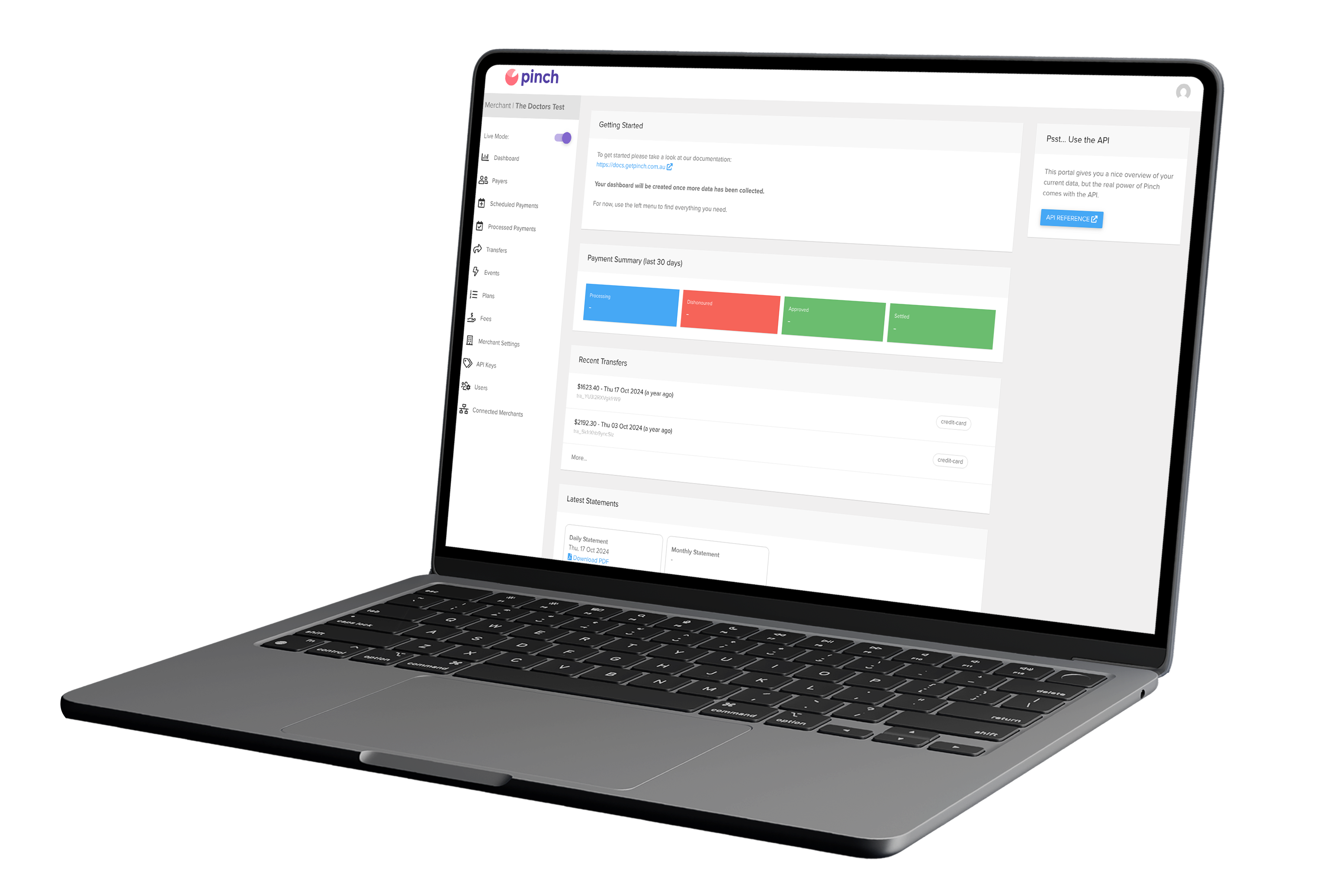
How Pinch Glassbox Supports the PayFac Journey
Pinch Glassbox is a PayFac-as-a-Service platform designed to help businesses develop and manage payment facilitation capabilities.
Built by the team behind Pinch Payments, Glassbox brings together merchant onboarding, compliance technology, payment processing, risk management and reporting infrastructure.
It provides a pathway for software platforms looking to develop more sophisticated payment capabilities without independently building the entire technology stack.
What Pinch Glassbox includes
Online merchant onboarding
Glassbox provides a digital onboarding experience with capabilities including email and phone verification, secure document uploads and identity verification.
Integrated compliance automation
Glassbox integrates with identity and compliance technology providers, including FrankieOne, to support KYC, AML/CTF, sanctions screening and beneficial ownership reporting.
Payment gateway infrastructure
Glassbox provides payment processing infrastructure, payment scheduling capabilities and access to transaction information through its portal or APIs.
Configurable fees and disbursements
Platforms can configure merchant fee arrangements and support transaction cost calculations, payment margins and disbursement processes.
Fraud and risk management
Glassbox incorporates fraud detection technology from Kount, an Equifax company, to help identify and manage transaction risks.
Merchant reporting
The platform supports merchant statements and reporting across different levels of merchant and payment operations.
API integration and data visibility
Glassbox provides API access and reporting tools to help platforms integrate payments and access transaction information.
Together, these capabilities can help reduce the complexity of building and operating payment facilitation infrastructure.
Explore Pinch Glassbox and its PayFac-as-a-Service capabilities to learn more.
Do You Need to Become a PayFac to Embed Payments?
Not necessarily.
Becoming a fully registered payment facilitator is only one approach to offering payments within a software platform.
Depending on the business's requirements, other options may include integrating a payment API, using a managed merchant model or working with a PayFac-as-a-Service provider.
For example, a SaaS business that wants to add recurring billing and direct debit may not need the same infrastructure as a platform managing payment services for hundreds of merchants.
The right approach depends on factors such as transaction volume, merchant relationships, technical resources, commercial goals and the level of control required.
Pinch offers different integration pathways to support software businesses as their payment requirements evolve.
Businesses can also explore the Pinch Platform Partner Program to understand opportunities to embed payments and create additional value for their customers.
Ready to Bring Payments Into Your SaaS Platform?
Whether you're looking to embed payments into your existing software, simplify merchant onboarding or explore a pathway towards becoming a PayFac, Pinch can help you assess the available options.
From API integrations to more advanced merchant management through Glassbox, Pinch provides payment infrastructure designed for Australian software businesses.
See how it works
Watch a Pinch product demo to understand how integrated payments can fit into your software workflows.
Talk to our team
Book a demo with Pinch Payments to discuss your platform, payment requirements and the most suitable integration approach.
With the right infrastructure and partners, payments can become an integrated part of your software and a new opportunity for business growth.
Disclaimer: The information provided in this guide is for general informational purposes only. It does not constitute legal, financial, or taxation advice. While we strive to provide accurate and up-to-date details based on current Australian regulations, business requirements can change. We recommend consulting with a qualified accountant, lawyer, or business advisor before making any significant decisions or taking action based on this content.