 Curious to see how Pinch works? Check it out



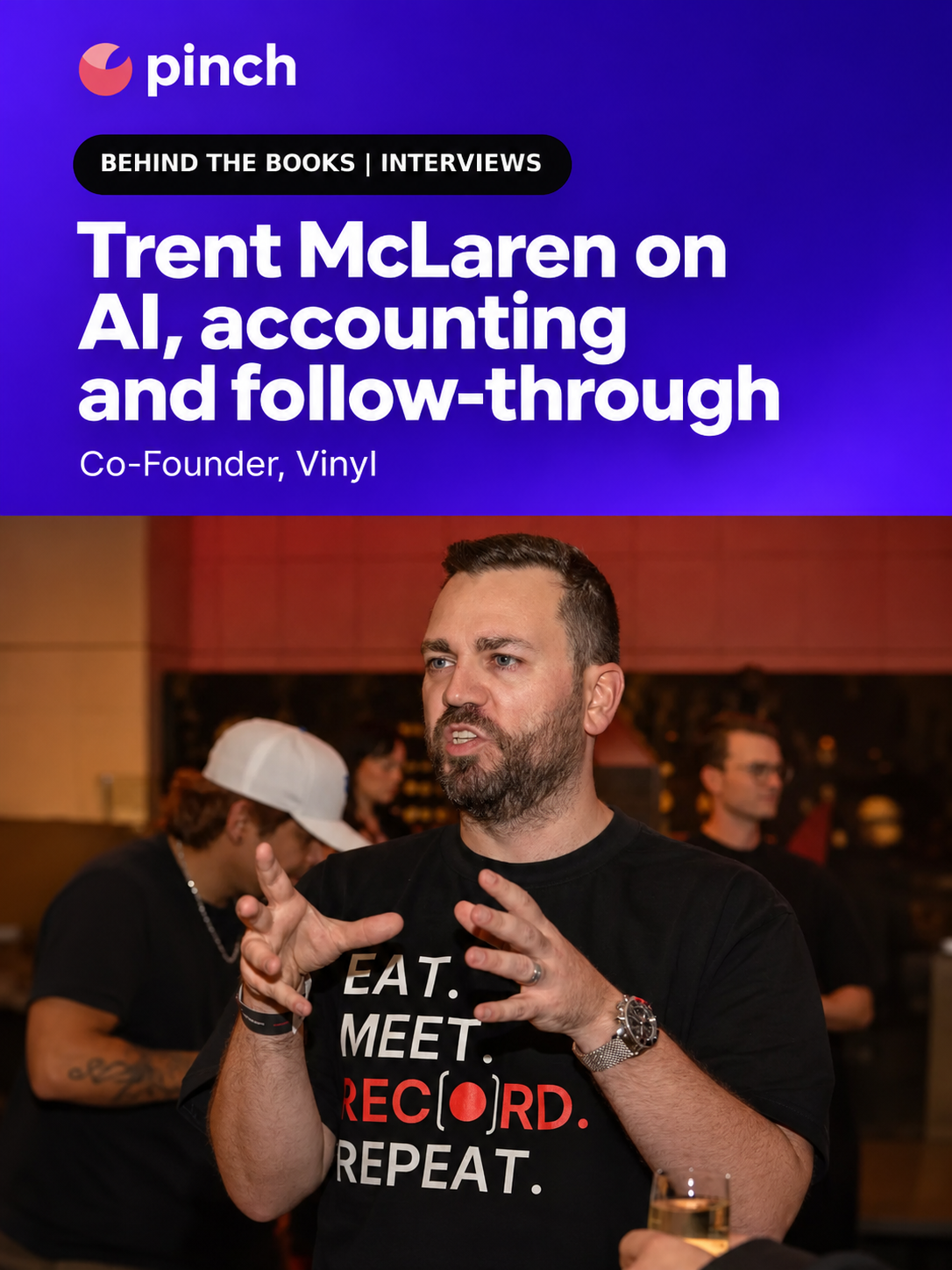
Author: Trent McLaren, Co-Founder of Vinyl
Trent McLaren is the co-founder of Vinyl, the AI meeting companion for accountants and bookkeepers, and the founder of Journey, the go-to-market team built for accounting tech. He has spent more than a decade helping accounting software companies grow, from seed to Series C, partnering with names like Ignition, Intuit QuickBooks, Weel and TOA Global.
Website: www.usevinyl.com/au
LinkedIn: /in/trentmclaren
What’s something about your work that people outside the accounting and bookkeeping industry completely misunderstand?
A lot of people outside the industry assume the hard part is the numbers. From what I see building Vinyl, the real pain sits after the client meeting: the conversation was useful, but the notes are scattered, someone has to chase missing information, the work needs an owner, and promises need to turn into action. That gap is where good intentions die.
Let’s talk about charging for your expertise. Do you think accountants and bookkeepers are getting better at recognising their value and charging what they’re worth? What’s still holding the industry back?
Better, but slowly. The industry has talked about value pricing for years and plenty of firms still sell hours. What holds it back is rarely the maths. It is the work clients never see: the follow-up after every meeting, the notes, the chasing, the reminders. Those hours eat the week and never make it onto an invoice, so the price only ever covers the visible part.
Forget the AI hype for a moment. How are you actually using AI in your day-to-day work? Has it genuinely changed the way you operate, or are we still waiting for the big transformation?
Genuinely changed. It is the business: at Vinyl we build an AI meeting companion for firms, and my own meeting notes run through it. I also build a lot of my day-to-day workflows and tooling on AI models. The change that matters is not a chatbot moment. It is killing the admin gap after meetings: the notes get written, actions get an owner, and promises actually get followed up.
Fast-forward to December 2027. What do you think will look noticeably different for accountants and bookkeepers? Will AI, automation and changing client expectations reshape the profession, or will the biggest changes come from somewhere else?
By the end of 2027 I think the admin layer between meeting and follow-up has mostly disappeared. Notes, drafting, chasing and reminders happen in the background, compliance gets cheaper to deliver, and the firms that win spend the freed-up hours with clients instead of on keyboards. The constraint won't be the tech. It will be whether firms change how they work.
What’s one lesson, unpopular opinion or piece of advice you’ve learned through experience that you wish more accountants and bookkeepers would hear?
Most firms don't have a technology problem, they have a follow-through problem. They buy the tool, attend the webinar, then change nothing about the process, and the software becomes shelfware. The return was decided by implementation, not features.
If you could give every new business owner just one piece of financial advice before they send their first invoice or hire their first employee, what would it be — and what mistake would it help them avoid?
Know your cash position every week, and keep business money separate from personal money from day one. It avoids the classic first-year trap: a tax bill or payroll run you genuinely cannot pay because the bank balance lied about what was yours.
Looking at the businesses you work with, what is one overlooked opportunity for small businesses in Australia and New Zealand to become more resilient or grow over the next 12 months?
Resilience is boring: do what you said you would do, every time. The overlooked opportunity is systematising follow-up. Every promise from every client conversation, captured, owned and done. It costs nothing, it is the fastest way to stand out, and it compounds into trust and referrals.
Disclaimer: The information provided in this guide is for general informational purposes only. It does not constitute legal, financial, or taxation advice. While we strive to provide accurate and up-to-date details based on current Australian regulations, business requirements can change. We recommend consulting with a qualified accountant, lawyer, or business advisor before making any significant decisions or taking action based on this content.
Ready to automate your payments?
Posted by Admin